Microsoft Azure Maia 200 and the New Era of Hyperscaler Inference Silicon
Ryan Shrout
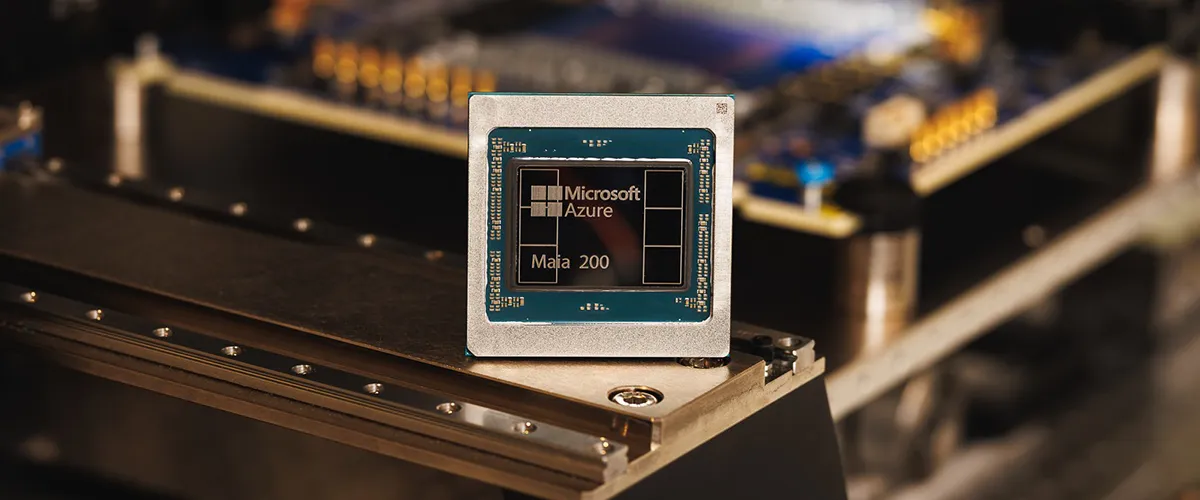
Azure Maia 200 represents a meaningful step in Microsoft’s effort to build differentiated AI infrastructure for the inference era. The story goes beyond a single accelerator specification sheet. Maia 200 is presented as a platform that combines silicon, rack-scale architecture, networking, and a software stack designed to improve the economics of token generation at cloud scale.
Microsoft positions Maia 200 as part of a portfolio approach rather than a single replacement for merchant silicon. The core design target is inference leadership on performance per dollar and performance per watt, paired with a heterogeneous Azure fleet strategy that continues to include accelerators from NVIDIA and AMD where those platforms provide the best fit for a given workload and deployment timeline.
Microsoft has also said Maia 200 is the result of deliberate choices aimed at LLM and reasoning inference patterns, including a large HBM3E footprint, a large on-die SRAM hierarchy, an integrated Ethernet-based scale-up NIC, and a two-tier scale-up network that emphasizes predictable collectives without moving to a traditional scale-out fabric. These choices reflect a hardware and software co-design effort intended to reduce cost, increase utilization, and improve the effective bandwidth available to real inference graphs.
FP4 Throughput Leadership, Built for Inference Economics
Maia 200 makes a deliberate bet on narrow-precision formats as the path to scaling token generation efficiently. Peak FP4 throughput positions it as a serious competitor to modern AI accelerators in the narrow-precision inference era.
A Tiered Hierarchy for Effective Bandwidth
Large SRAM and explicit locality controls help keep high-value data on die, reduce repeated HBM accesses, and improve sustained throughput. The practical goal: keep data local when possible, fall back to HBM, and use remote HBM through scale-up paths when needed.