AMD Ryzen AI Halo First Look: A Personal AI Workstation on Your Desk
-
 Ken Addison
The desktop AI moment
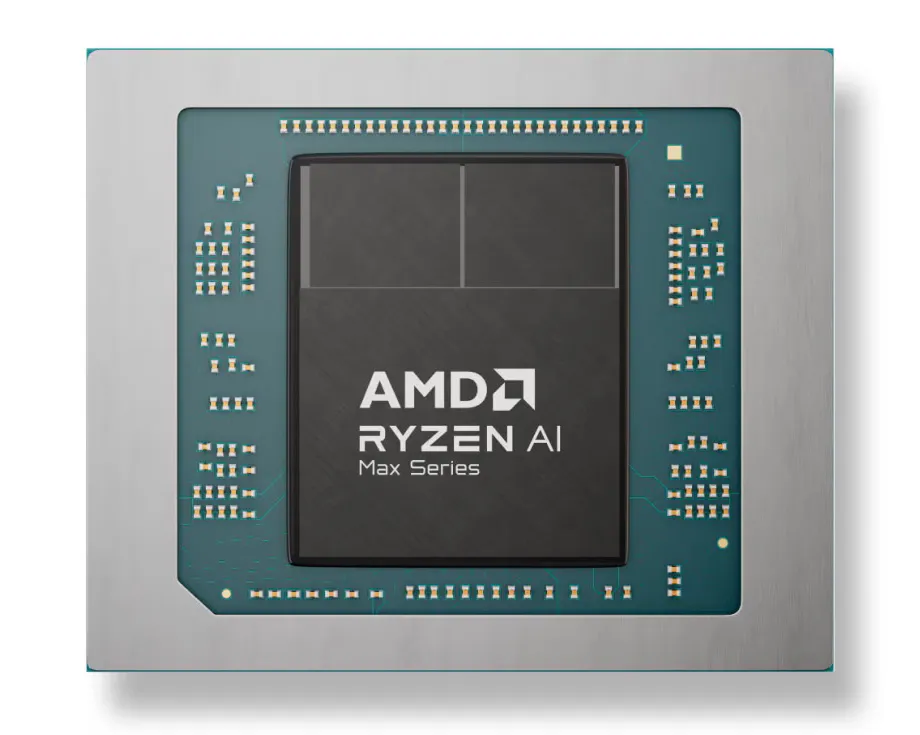
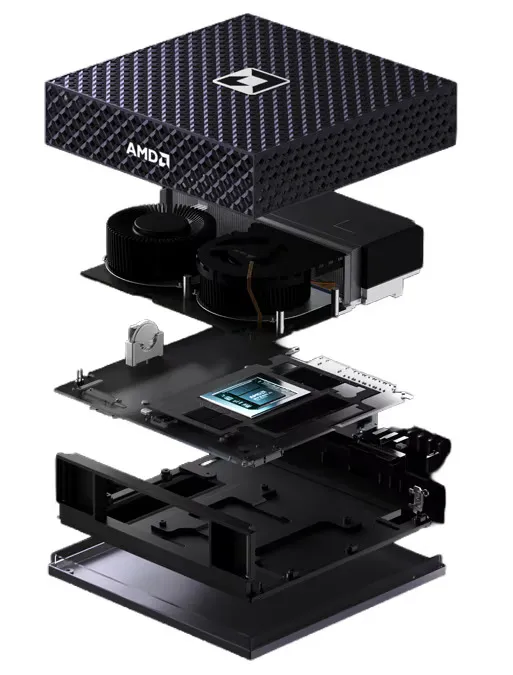
The race to move to local AI from the cloud continues to heat up. A new class of small, quiet mini-PCs now ships with 128GB of unified memory, enough to hold models that used to demand a server rack. AMD’s entry, the AMD Ryzen AI Halo system, is a mini-PC built on the Ryzen AI MAX+ 395 processor and Radeon 8060S graphics. It is a Windows machine designed to run large models locally while still working as a full desktop PC.
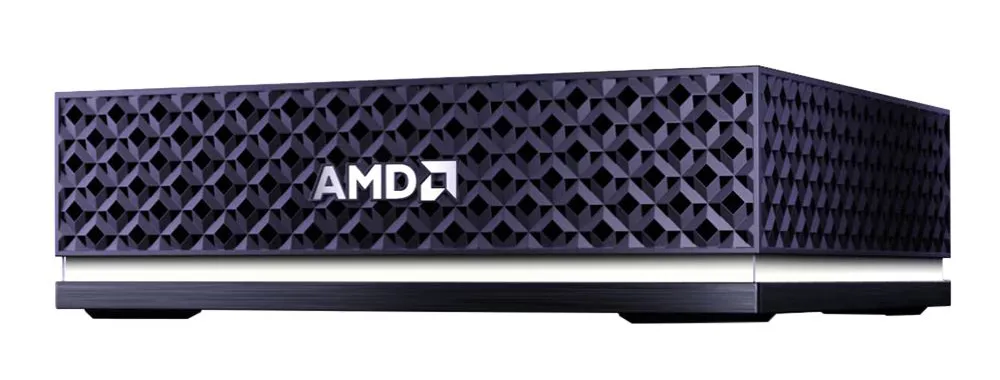
To put its numbers in context we tested it alongside NVIDIA’s DGX Spark, the compact Linux machine that helped define this category. Both are mini-PCs with 128GB of shared CPU and GPU memory, which is the key to running very large language models on your own hardware.
Value proposition
Price is the first place the AMD system makes its case. As configured, the AMD Ryzen AI Halo system lists at $3,999 dollars with 2TB of storage. The DGX Spark now lists at $4,699 dollars with 4TB of storage, up from its $3,999 dollar launch price. This leaves a market opportunity for AMD, but the AMD Ryzen AI Halo does come at a price premium to other Strix Halo-powered Mini PCs like the Bosgame M5 at $2799 or the GMKtec EVO-X2 at $3399 both with the same CPU, 128GB of memory and a 2TB SSD.
Specifications
| AMD Ryzen AI Halo system | NVIDIA DGX Spark | |
|---|---|---|
| Processor | Ryzen AI MAX+ 395 (16 cores, 32 threads, Zen 5) | GB10 (20-core Arm: 10x Cortex-X925 + 10x A725) |
| Graphics | Radeon 8060S (integrated) | NVIDIA Blackwell GPU |
| Memory | 128GB unified (tunable split, up to 96GB to GPU on Windows) | 128GB LPDDR5X unified |
| Storage | 2TB NVMe | 4TB NVMe |
| Operating system | Windows 11 Pro | Ubuntu 24.04 (NVIDIA stack) |
| AI software path | Vulkan and ROCm | CUDA 13 |
| Price as tested | $3,999.99 | $4,699.99 |
One AMD specific detail matters for large models. The unified memory split between system RAM and graphics memory is adjustable. We set the graphics allocation to 96GB, which did allow us to fit larger models like the GPT-OSS 120B model into memory, but is still a limitation not present on the DGX Spark. This limitation is also currently Windows specific. Linux machines with the AMD Ryzen AI Max 395+ can allocate memory dynamically to the GPU higher than 96GB.
Language model inference - token generation
Token generation, the speed at which a model streams out its answer, is the number a user feels most directly in a chat or coding assistant. Here the AMD Ryzen AI Halo system matches or beats NVIDIA’s DGX Spark across the board.
| Model | AMD Ryzen AI Halo tokens /s | DGX Spark tok/s | AMD Ryzen AI Halo vs Spark |
|---|---|---|---|
| Gemma 4 12B (dense) | 28.3 | 29.3 | 0.97x |
| Gemma 4 26B-A4B (MoE) | 53.3 | 50.1 | 1.06x |
| Qwen 3.6 27B (dense) | 13 | 11.9 | 1.09x |
| Qwen 3.6 35B-A3B (MoE) | 63.6 | 66.9 | 0.95x |
| GPT-OSS 120B (MoE) | 56.2 | 57.8 | 0.97x |
Across five modern models the AMD system lands between 0.95x and 1.09x of the DGX Spark on token generation.
Language model inference - Prompt processing
Token generation is only half of the inference story. The other half is prompt processing, or prefill, the work of reading the input before the model can respond. This is the AMD system’s soft area today. The Strix Halo system processes input at roughly 0.3x to 0.6x the rate of the Spark.
| Model | AMD Ryzen AI Halo prompt tokens /s | DGX Spark prompt tok/s | AMD Ryzen AI Halo vs Spark |
|---|---|---|---|
| Gemma 4 12B | 570 | 1,946 | 0.29x |
| Gemma 4 26B-A4B | 1,113 | 2,762 | 0.40x |
| Qwen 3.6 27B | 274 | 806 | 0.34x |
| Qwen 3.6 35B-A3B | 1,273 | 2,270 | 0.56x |
| GPT-OSS 120B | 809 | 1,818 | 0.45x |
For short prompts this is invisible, because a two second read versus a one second read does not change the experience. It becomes relevant only for very long inputs and agent style workloads.
Serving agentic workloads
Modern agent workloads, such as multi step assistants with tool calling, are now common in developer workflows. They read large and growing contexts at every step including system prompts, tool definitions, conversation history, and tool outputs such as file contents and search results. This makes them prompt processing bound, the AMD system’s softer area. We measured prefill as context grows on two models, the dense Qwen3.6 27B and the flagship GPT-OSS 120B, which uses a mixture-of-experts design.
Qwen3.6 27B (dense), cold prefill time by context:
| Context length | AMD Ryzen AI Halo prefill time | DGX Spark prefill time | AMD Ryzen AI Halo vs Spark |
|---|---|---|---|
| 2K tokens | 6.3 s | 2.5 s | 0.40x |
| 8K tokens | 29 s | 10 s | 0.36x |
| 32K tokens | 2.5 min | 44 s | 0.29x |
| 128K tokens | 21.7 min | 3.9 min | 0.18x |
GPT-OSS 120B (mixture-of-experts), cold prefill time by context:
| Context length | AMD Ryzen AI Halo prefill time | DGX Spark prefill time | AMD Ryzen AI Halo vs Spark |
|---|---|---|---|
| 2K tokens | 2.5 s | 1.2 s | 0.46x |
| 8K tokens | 10.9 s | 4.4 s | 0.40x |
| 32K tokens | 1.0 min | 21 s | 0.34x |
| 128K tokens | 9.1 min | 2.1 min | 0.23x |
Two things stand out. First, model architecture matters as much as the machine. The mixture-of-experts 120B model prefills far faster than the dense 27B on both systems, cutting the AMD system’s cold 128K read from about 22 minutes to about 9. For serious agent work that is the more relevant figure.
Second, cold reads are a worst case that only occurs on a first turn or a cache miss. Real agent frameworks cache the processed context and read only the new tokens each turn, and in that warm steady state the picture is much closer.
Warm turn, 32K already cached, ingesting a 512 token tool result and generating 128 tokens:
| Warm turn at 32K cached | AMD Ryzen AI Halo – Qwen3.6-27B | DGX Spark – Qwen3.6-27B | AMD Ryzen AI Halo – GPT-OSS 120B | DGX Spark – GPT-OSS 120B |
|---|---|---|---|---|
| Time to first token | 2.9 s | 0.77 s | 1.3 s | 0.41 s |
| Generation speed (tok/s) | 11.6 | 10.7 | 43.3 | 38.5 |
| Total turn (512 in, 128 out) | about 14 s | about 12.7 s | about 4.3 s | about 3.7 s |
Once warm, the total time per agent turn is close, and on the 120B it is genuinely quick at about 4.3 seconds on the AMD system, where its token generation actually leads at 43.3 tokens per second to 38.5. What a user feels is a longer pause when a large new chunk first arrives, most of all on a cold start with a fresh large context. For a single developer running one agent with caching on, the AMD system is a comfortable fit. Sustained, highly concurrent multi-agent serving, where cold reads are constant, is the workload that most favors the Spark.
Beyond AI: a real workstation
| Workload | AMD Ryzen AI Halo | DGX Spark | AMD Ryzen AI Halo vs Spark |
|---|---|---|---|
| 7-Zip compression (total rating) | 173,033 MIPS | 124,418 MIPS | 1.39x |
| 7-Zip decompression | 197,139 MIPS | 106,534 MIPS | 1.85x |
| Geekbench 6 single core | 2,982 | 3,006 | 0.99x |
| Geekbench 6 multi core | 17,886 | 18,096 | 0.99x |
| Memory bandwidth (single thread copy) | 65.5 GB/s | 55.0 GB/s | 1.19x |
The general purpose CPU race is essentially even, with Geekbench single and multi core both landing at 0.99x. But on real throughput work the AMD system’s 16 Zen 5 cores pull ahead, winning 7-Zip compression and decompression outright and leading on memory bandwidth. For a buyer who wants one machine that runs local AI but also wants a tradition Windows-based desktop system, the AMD Ryzen AI Halo has advantages.
Video encoding
AI work is increasingly visual. Video generation, multimodal understanding, and the preparation of image and video training data all sit on top of a media pipeline that must decode, transcode, and re-encode large volumes of footage before a model ever sees it. The AMD Ryzen AI Halo system is strong here on two fronts.
Software encoding runs entirely on the CPU and plays directly to the AMD system’s 16 Zen 5 cores and mature x86 encoder assembly.
| Software encode (1080p, preset medium) | AMD Ryzen AI Halo | DGX Spark | AMD Ryzen AI Halo vs Spark |
|---|---|---|---|
| H.264 (libx264) | 332 fps | 272 fps | 1.22x |
| H.265 (libx265) | 108 fps | 30 fps | 3.60x |
Hardware accelerated encoding is where the design difference shows for pipeline work. The AMD system carries two independent video encode engines to the Spark’s single video engine. A single encode is quick on both, but a real ingestion or transcode pipeline runs many streams at once, and there the AMD system scales to roughly 3.4 times the aggregate throughput.
| Hardware encode (1080p HEVC) | AMD Ryzen AI Halo | DGX Spark | AMD Ryzen AI Halo vs Spark |
|---|---|---|---|
| Peak aggregate throughput (many streams) | 1,344 fps | 396 fps | 3.40x |
| Parallel encode engines | 2 | 1 | 2x |
Quality is a wash: on real 4K footage the two hardware encoders land within a fraction of a VMAF point of each other, so the practical difference is throughput, not fidelity.
Power draw
Running its GPU flat out, the AMD system draws about 196 watts at the wall, measured with an inline POWER-Z USB-C PD analyzer sampling true device input power. It idles at 31 watts and holds near its power ceiling under any sustained load.
| State | AMD Ryzen AI Halo input power | DGX Spark input power |
|---|---|---|
| Idle | 31 W | 27 W |
| Gemma 12B inference (dense) | 196 W | 109 W |
| GPT-OSS 120B inference (MoE) | 196 W | 53 W |
The AMD processor trades efficiency for an aggressive performance envelope, so on a tokens-per-watt basis it is less efficient than the Spark, roughly 0.26x on the 120B model. That gap could matter for an always-on server but far less for a desktop that works in bursts. Both machines ran cool and quiet throughout our testing.
Conclusion
The AMD Ryzen AI Halo system makes a strong first impression. It generates tokens as fast The DGX Spark which cost $700 more, runs a 116 billion parameter model on a Windows desktop, wins clearly on everyday workstation tasks, and doubles as a capable x86 PC. For an individual developer, a content creator, or anyone who wants local AI plus a real workstation in one quiet, affordable box, it is an easy machine to recommend.
Prompt processing on very long contexts and sustained concurrent serving are areas where it trails today, and it is less power efficient under heavy load. Buyers whose work centers on those specific demands should weigh them.
For the broad middle of the market, though, a mainstream x86 mini PC can now keep pace with purpose built AI hardware on the task most people do most often, generating tokens from a model on their own desk, and it does so for less money while also being a better all around computer. That is a notable moment for local AI, and a strong endorsement of AMD’s Strix Halo strategy.
Research commissioned by: