UL’s Procyon Essentials Arrives
A New Multitasking Benchmark for the Modern PC
-
 Ken Addison
Today, UL Solutions launched Procyon Essentials, a multitasking benchmark designed to measure how PCs handle the overlapping demands of a real workday. Unlike synthetic tests that isolate individual components, Procyon Essentials runs foreground and background workloads simultaneously — simulating the kind of task-juggling that defines how most people actually use their machines.
What Procyon Essentials Measures
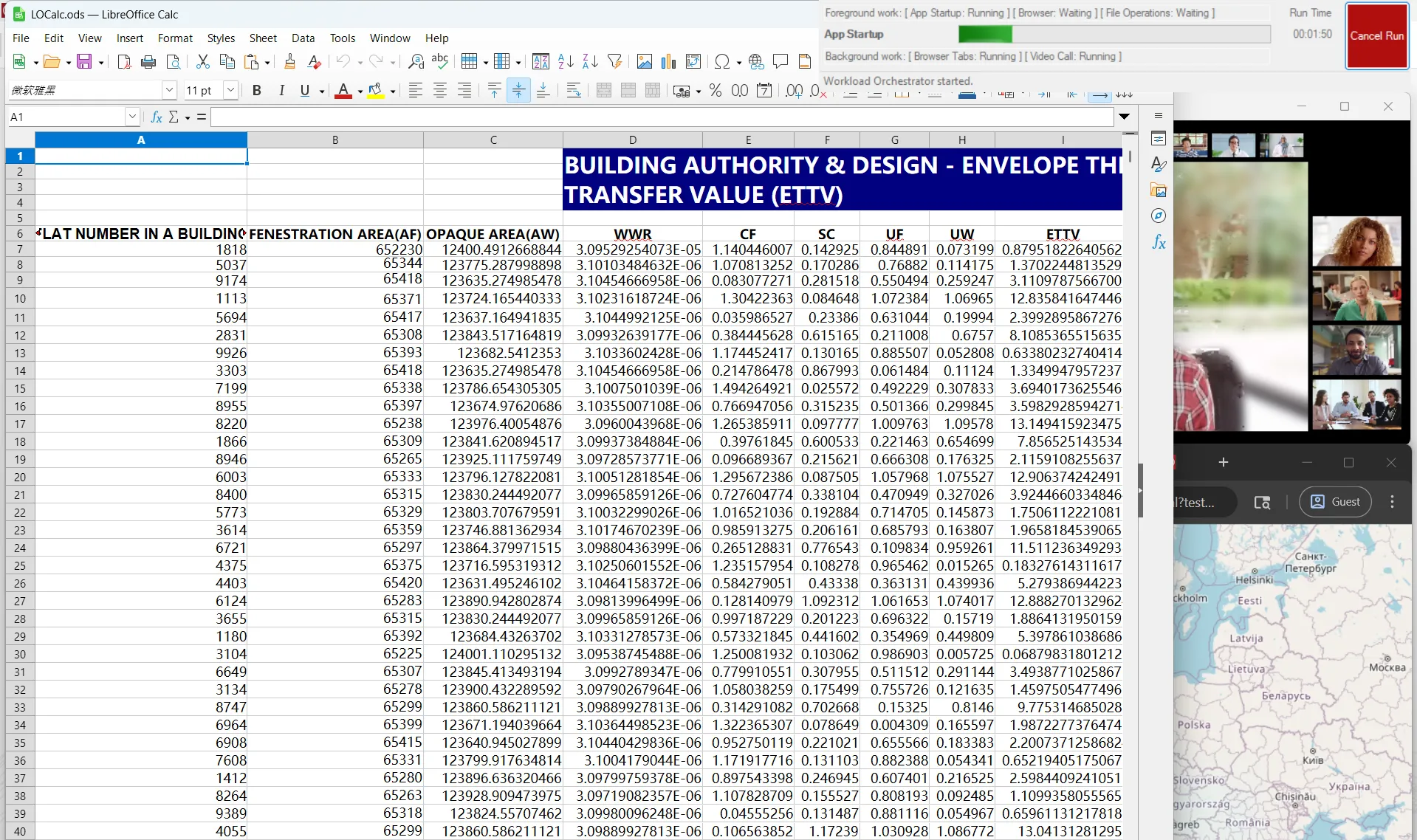
The benchmark structures its workloads around a familiar scenario: a user on a video call with dozens of browser tabs open, while actively switching between applications and performing file operations in the foreground.
Foreground workloads cycle through in series and include:
- Web Browser Test – web browser performance for simulated websites including a CRM dashboard, an ecommerce site with 3D product models, chat with on-device AI summarization, social media, and maps.
- App Startup Test – measured launch times for Chromium web browser, LibreOffice Calc, LibreOffice Impress, and VS Code.
- File Operations Tests – covering copy, move, delete, and compression tasks.
Running in parallel throughout are two background loads: a simulated video call that leverages Windows ML and NPU acceleration where available, and 30 open browser tabs capped with a simulated weather radar map webpage.
Scoring uses a weighted geometric mean across the five sub-tests, with foreground workloads carrying more weight than background ones. A baseline constant pegs an overall score of 5,000 to a high-end reference machine at launch.
First Look at the Numbers
We put three laptops across the most recent mobile platforms from Intel, AMD, and Qualcomm through Procyon Essentials across three runs each, and the results reveal some striking contrasts in how different platforms handle sustained multitasking.
Overall Scores
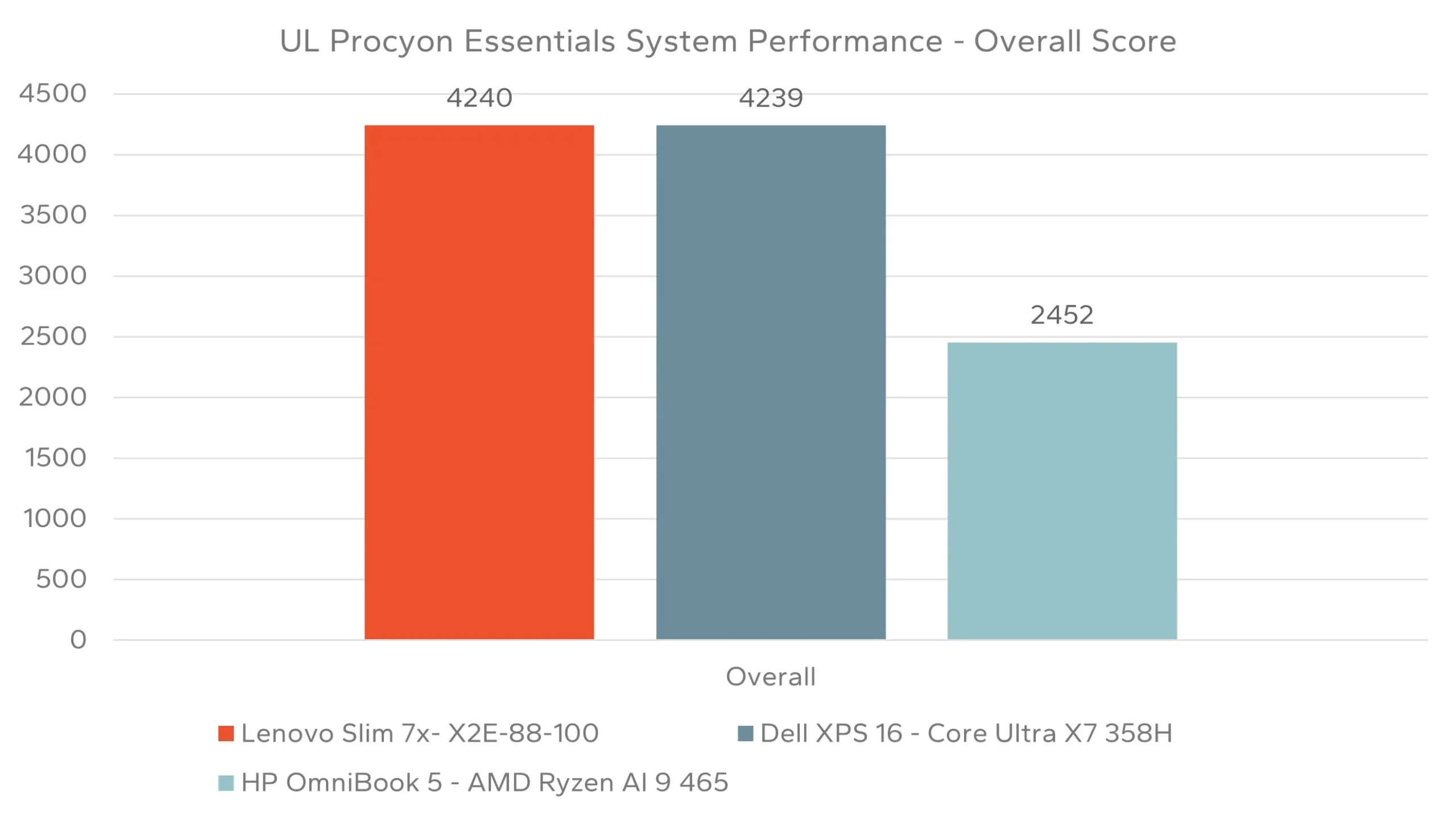
The headline: the Lenovo Slim 7x and Dell XPS 16 are effectively tied at the top, separated by a single point on the overall score. The HP OmniBook 5 trails both by a wide margin — scoring about 42% lower.
Let’s now look at all the individual test score breakdowns to dig a bit deeper.
Sub-test Breakdown
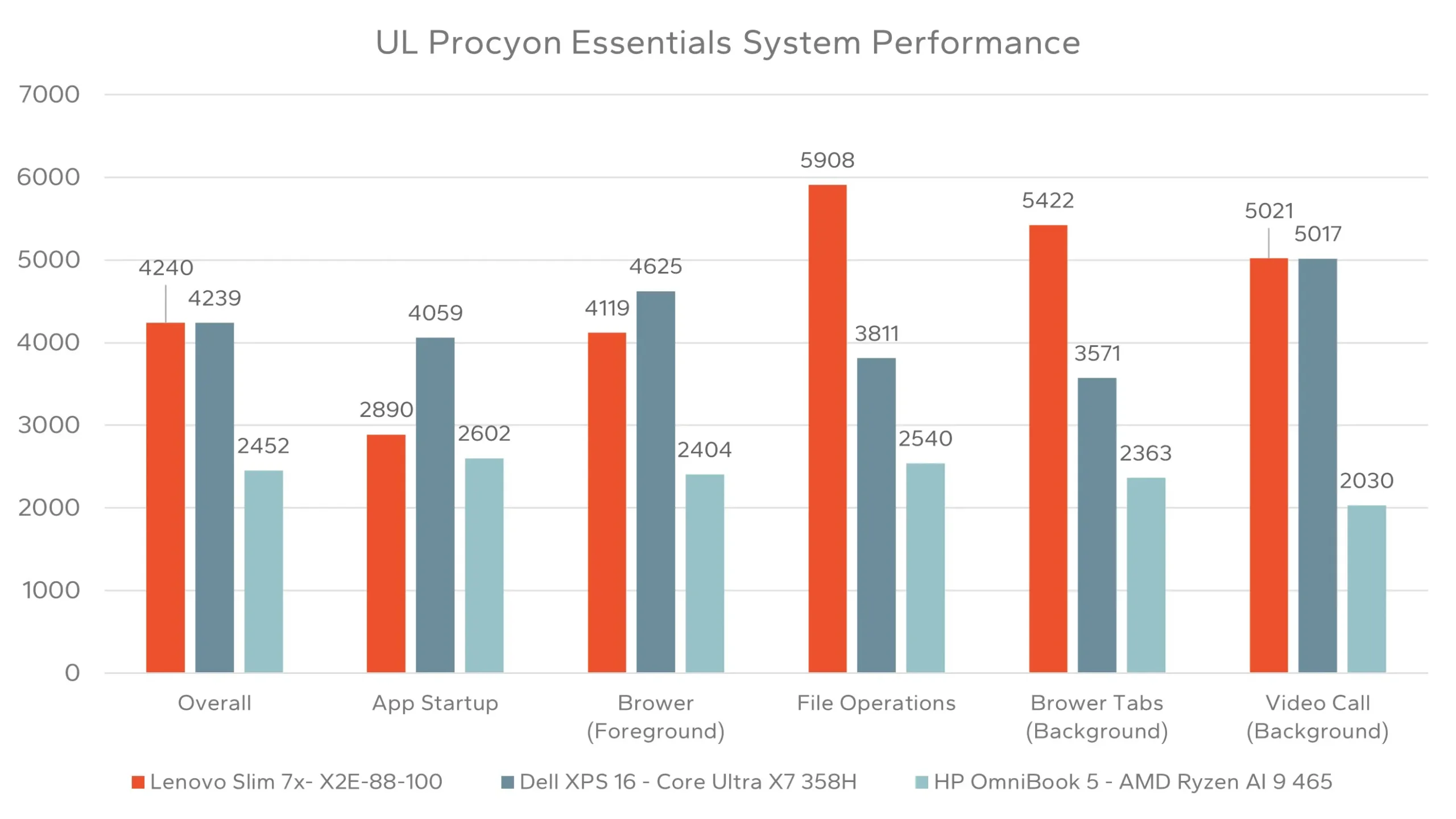
The Intel Panther Lake-powered Dell XPS 16 leads in the two workloads: App Startup (4059 vs. 2890 for the Lenovo) and Browser Foreground (4625 vs. 4119). Intel’s Core Ultra architecture shows its strengths in responsiveness and page-rendering throughput.
The Lenovo Slim 7x, powered by Qualcomm’s Snapdragon X2 Elite, fights back hard in storage and memory-intensive workloads. The Lenovo Slim, 7x’s File Operations score of 5908 is 55% higher than the Dell’s score of 3811. This performance lead can point to advantages in sustained I/O throughput for these particular systems.
These advantages could be attributed to the CPU performance, but also to the performance of the SSD in each system. This is a new comparison capability that Procyon Essentials unlocks and we are looking forward to digging deeper into as we test more systems on this new benchmark.
Similarly, the X2 Elite’s Browser Tabs background score of 5422 outpaces the Panther Lake CPU by over 50%, potentially pointing to advantages in the increased core count of the X2 Elite processors compared to the Intel competition.
The Video Call background workload which leans on NPU acceleration via Windows ML produces near identical results between the two top systems (5021 vs. 5017), indicating that both Qualcomm and Intel’s NPU implementations handle the SAM 2.1 Tiny inference workload comparably.
The HP OmniBook 5 with AMD’s Ryzen AI 9 465 consistently scores lowest across every sub-test. Its Video Call score of 2030 is less than half of the other two systems, suggesting that AMD’s platform may not yet be matching Qualcomm and Intel on NPU-accelerated workloads within this specific benchmark framework.
The Video Call workload caps video detection at 5 fps and streaming at 30 fps, meaning that this test is more about meeting a “usable” threshold of performance rather than a race to a higher and higher score.
The gap with the AMD Gorgon Point platform persists in CPU-bound tests as well, with the Browser and File Operations scores both landing at 2404 and 2540 respectively
Early Takeaways
These early results highlight what Procyon Essentials is designed to surface: the tradeoffs between platforms don’t always show up in a single number. A benchmark that runs everything at once, including browser rendering, app launches, file I/O, video conferencing, and background tabs can create a more nuanced picture of where each architecture excels and where it falls short.
As we test more and more systems now that the benchmark is being released, Procyon Essentials looks set to become a useful lens for evaluating the real-world multitasking performance that matters most to professionals choosing their next machine.